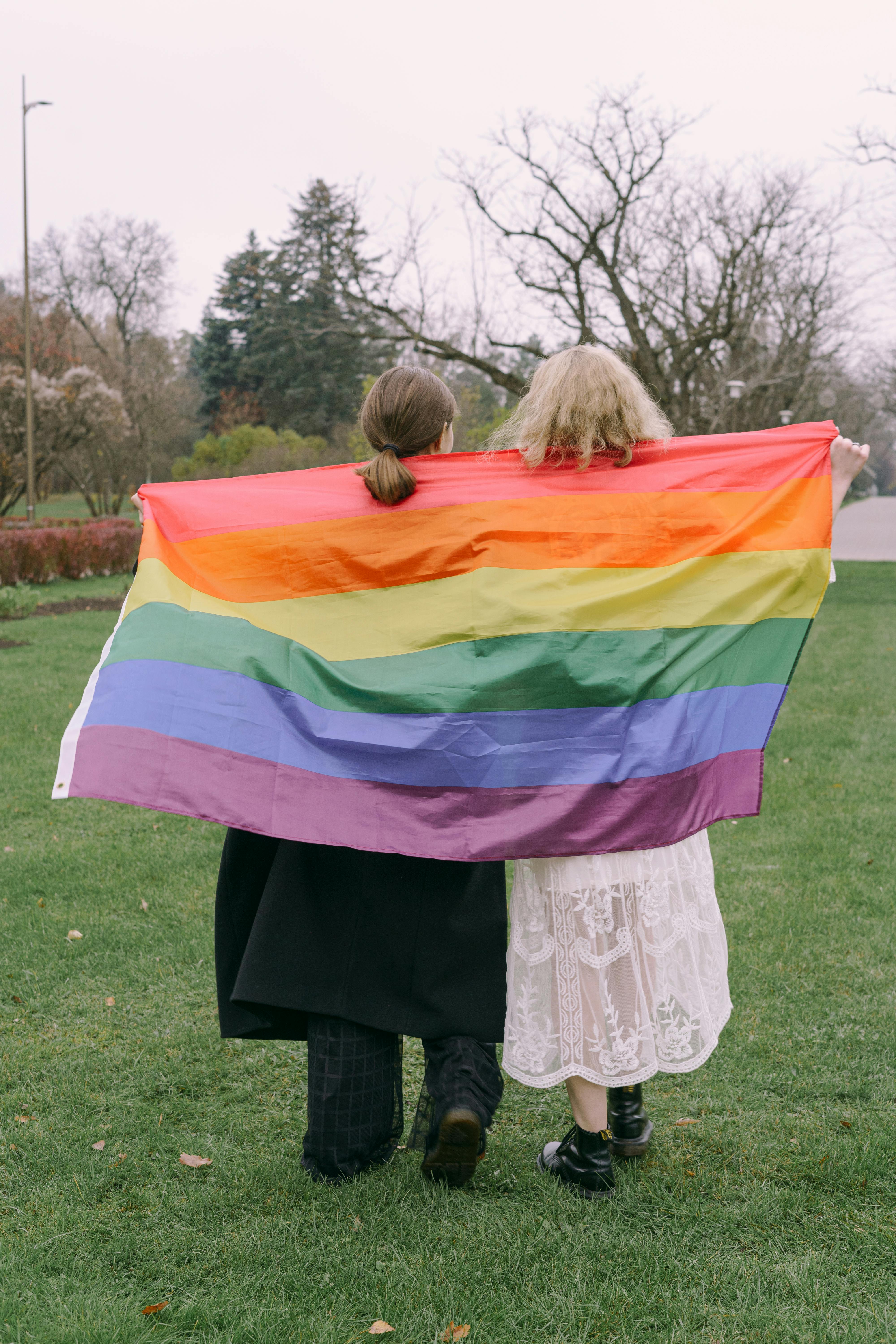

Why Are There More and more Lesbian On Internet?
In the internet age, many people feel that there are more and more lesbians visible online. This sense of "increase" is not simply a growth in numbers, but the result of significantly improved "visibility" of this group under the combined effect of multiple social and technological factors.
First, the progress of social attitudes has reduced invisible pressure. In the past, influenced by traditional concepts and social prejudices, many sexual minorities had to hide their sexual orientation. "Daring not to speak up, unable to speak up" was the norm. However, as society's understanding of diverse genders has spread, the acceptance of the LGBTQ+ community has gradually increased — from the emphasis on gender equality in the education system, to the gradual improvement of anti-discrimination laws, and to the popularization of the idea that "sexual orientation is a natural existence" in daily context. More and more people no longer regard "lesbians" as "abnormal". This relaxed social environment allows more people to dare to remove their "disguise" and openly express their identity on the internet.
Second, the internet has built exclusive community spaces for minority groups. In real life, sexual minorities may find it difficult to find like-minded people due to geographical and social circle restrictions. But the anonymity and cross-temporal nature of the internet have broken these physical barriers. From early forums and post bars to today's social platforms and interest communities, countless online spaces have become their "safe zones" for communication: sharing experiences, finding resonance, getting support... These communities not only make individuals no longer feel lonely, but also gather scattered voices into a perceptible group force. When originally "hidden" individuals become active in communities, it naturally gives the outside world the impression that "the number is increasing".
Moreover, the deepening of gender awareness has helped more people recognize themselves. In the past, society's understanding of sexual orientation was often limited to the binary framework of "straight or gay". Many people, even if they had a crush on the same sex, might suppress themselves because "they didn't know what it was". Now, with the deepening of gender research and the popularization of related knowledge, the concept that "sexual orientation is a spectrum rather than an absolute binary" has been accepted by more people. Rich popular science content on the internet (such as articles on gender theory, personal experience sharing, interpretations by professional scholars, etc.) has helped many people who once confused about their emotions clarify their understanding — it turns out that "liking the same sex" is a natural self-expression and there is no need to be ashamed of it. This clarity of self-awareness makes more people willing to "show up" online.
In addition, the community aggregation effect of the internet has amplified the group's voice. In reality, sexual minorities may be scattered and it's difficult to form a visible group. But on the internet, functions such as social platforms, interest groups, and topic tags can quickly gather people with the same identity or experience. For example, social apps focusing on the LGBTQ+ community, Weibo super topics, and related sections on Bilibili, etc., allow originally isolated individuals to find their "organization". When these communities are constantly active and continuously produce content (such as sharing daily love life, popularizing gender knowledge, discussing life puzzles), they will naturally be seen by more netizens, forming the impression that "this group is very active".
At the same time, the positive guidance of the media and public figures has lowered the threshold for expression. In recent years, more and more film and television works, literary works have begun to portray lesbian images positively, no longer shaping them as exotic symbols, but showing their real emotions and lives (such as "Carol", "The Half of It", etc.). Many public figures have also publicly supported the LGBTQ+ community, and even frankly talked about their sexual orientation. These contents and voices are widely spread through the internet, which not only let more people understand the existence and needs of this group, but also reduce the fear of "suffering discrimination for public identity", indirectly encouraging more people to bravely be themselves online.
Finally, generational differences also affect online visibility. The younger generation has grown up in a more inclusive social environment, with a higher acceptance of diverse gender identities, and is more accustomed to sharing personal lives and ideas through the internet. In contrast, the older generation may be more deeply influenced by traditional concepts. Even if they have the same sexual orientation, they rarely express it publicly online. Therefore, the high visibility of the "lesbian" group on the internet is to some extent a reflection of the increasing voice of the younger generation — with a more open attitude, they have brought the originally ignored group voice into the public view.
In short, the feeling that there are more and more lesbians on the internet is essentially the result of the combined effect of improved social inclusiveness, empowered internet technology, and awakened individual self-identity. This is not a "growth in numbers", but a process of "hidden groups gradually moving towards openness". This change not only makes more people feel that "they are not outliers", but also promotes society to develop in a more diverse and inclusive direction — after all, a truly progressive society is never afraid to see every kind of real existence.
Here, we recommend a lesbian community on the internet, LesPark, which has more than 30 million like-minded female users from over 30 countries and regions around the world, and the number of anchors has exceeded 150,000. On LesPark, users from different countries and regions can share their respective cultures, lifestyles, hobbies, etc., promoting the exchange and integration of diverse cultures. Come and record the romantic little things in ordinary life, and learn about the diverse female lives around the world.