

International Lesbian Day 2026: Herstory, Meaning & How to Celebrate
October 8 belongs to lesbian women and their allies on every continent. Here's where the day came from, why visibility still matters in 2026, and how to join the world's largest community of lesbian & queer women.
October 8 is International Lesbian Day — an annual, worldwide celebration of lesbian culture, history and diversity. The day began in Aotearoa New Zealand, travelled to Australia in 1990, and now belongs to lesbian women and their allies on every continent. It exists for a simple reason: being a woman who loves women means living at the intersection of two sets of prejudice, and much of that prejudice comes from people simply never having been taught who you are. So October 8 is both a party and an invitation — to learn, to be visible, and to celebrate together. This guide covers where the day came from, why it still matters in 2026, and how to join millions of women marking it on LesPark.
What Is International Lesbian Day?
International Lesbian Day is held every year on October 8. It honours lesbian culture, herstory and community, and it is "all-inclusive — a day to be shared by lesbians and also allies of lesbian rights."
It sits alongside other milestones on the LGBTQ+ calendar, but it is not a duplicate of them:
Because it falls in October, International Lesbian Day often opens a fortnight of LGBTQ+ observances — Coming Out Day follows on October 11.
Where It Began: Aotearoa, 1980 → Australia, 1990 → the World
The exact origin is genuinely disputed, and most historians are upfront about it. The most widely accepted account (the Queer History Project of New Zealand) traces the day to March 8, 1980, when a group of roughly 40 lesbians marched through Central Park in Wellington, New Zealand. The date was later shifted to October 8 — exactly six months after International Women's Day — so the two observances would not collide.
Australia picked the thread up a decade later. The first Australian International Lesbian Day event took place on October 13, 1990, at Collingwood Town Hall in Melbourne, with musicians, market stalls, readings in the afternoon and a women's dance with live bands in the evening. Melbourne's lesbian community then celebrated on or around October 8 for years afterwards.
From those two countries the day spread outward. In 2026 it is marked by conferences — Brisbane has hosted an annual International Lesbian Day conference — community dances, health campaigns (LGBTIQ+ Health Australia notes ACON used the day to launch its lesbian health strategy) and organisations worldwide.
Why October 8 Still Matters: Two Prejudices Don't Cancel Out
Here is the part that gets missed. Lesbians are not just "women" plus "gay" — they sit at an intersection, and the discrimination aimed at them is compounded rather than averaged out.
"Lesbians exist at an intersection that can sometimes fall between the gaps."
— Dr Julie Scanlon, writing for the NHS Confederation
On the misogyny side, women's sexuality is policed, dismissed or made into a spectacle. On the homophobia side, same-sex attraction is still treated as a moral failing in many places. A lesbian can be shut out of women's spaces for being gay and out of queer spaces for being a woman — with neither community fully claiming her.
The numbers back this up. In a 2018 survey of LGBTQ+ women by the community app HER, 31% of respondents said they felt uncomfortable or unwelcome at Pride. Nearly a third of the people the rainbow flag is supposed to cover didn't feel covered.
And the deeper cause is rarely malice. It is unfamiliarity. Prejudice thrives in the absence of contact — which is exactly why a day built on visibility, stories and conversation matters more than it sounds. As the Charlotte Museum in New Zealand notes, it is worth remembering that until 1973 psychiatrists in the US classified homosexuality as a disorder, and women who did not conform to heterosexual expectations could be institutionalised. International Lesbian Day sits barely five decades from that world — which is precisely why the community keeps telling its own story out loud.
A Spectrum, Not a Single Story
There is no single "lesbian experience," and the day is not about flattening one into existence.
Women on this spectrum differ in age, race, culture, faith, ability, class and gender presentation. Some are out to everyone; some are out to no one. Some are living in cities with legal protection; some are navigating criminalisation and family rejection. Some are married, some are single by choice, some are mothers, some are happily not. Lesbian and queer women also distinguish themselves in how they name themselves — lesbian, gay, WLW, sapphic, queer — and the words matter to the people who use them.
That diversity is the point. When people only ever see one narrow image of who a lesbian is, they misunderstand everyone who doesn't match it. Visibility isn't a slogan; it's the mechanism that replaces assumption with acquaintance.
How to Celebrate International Lesbian Day 2026
You don't need a parade permit to mark October 8. Five things that actually work:
Tell a true story. Post about your own experience, or amplify a lesbian creator, author or historian you've learned from. First-person stories shift minds faster than statistics do.
Support lesbian-led causes. Recent years have seen the community encourage donations to charities supporting lesbian women — especially health, housing and safety services.
Learn one thing properly. Watch or read something made by the community rather than about it. Depth beats a repost.
Show up for someone who can't be loud. A private message to a friend who isn't out is often the most meaningful act available to you.
Reach out to a stranger who is celebrating alone. This is where International Lesbian Day, for many women, actually begins.
Celebrate Together on LesPark — the World's Largest Community of Lesbian & Queer Women
Some days are meant to be spent with people who already get it. LesPark hosts the world's largest community of lesbian and queer women — millions of women across the globe who are marking October 8 in the same way: by reaching out.
Here's how to spend the day inside the app:
Say hi first. Send a DM to someone whose profile made you smile. On a day about visibility, being the one who opens the conversation is its own small act of courage.
Join the October 8 celebration. Post your own International Lesbian Day moment, share what the day means to you, and browse what women around the world are saying.
Follow the community programs. In the comments, catch the shows and series produced by the platform, made to open up the many different worlds lesbian women live in — the spectrum, not the stereotype.
Bring a friend, or be one. Invite someone new, or be the friendly first reply for a woman who just joined.
The day is global now. Enjoy it with the biggest crowd of women who understand it without explanation.
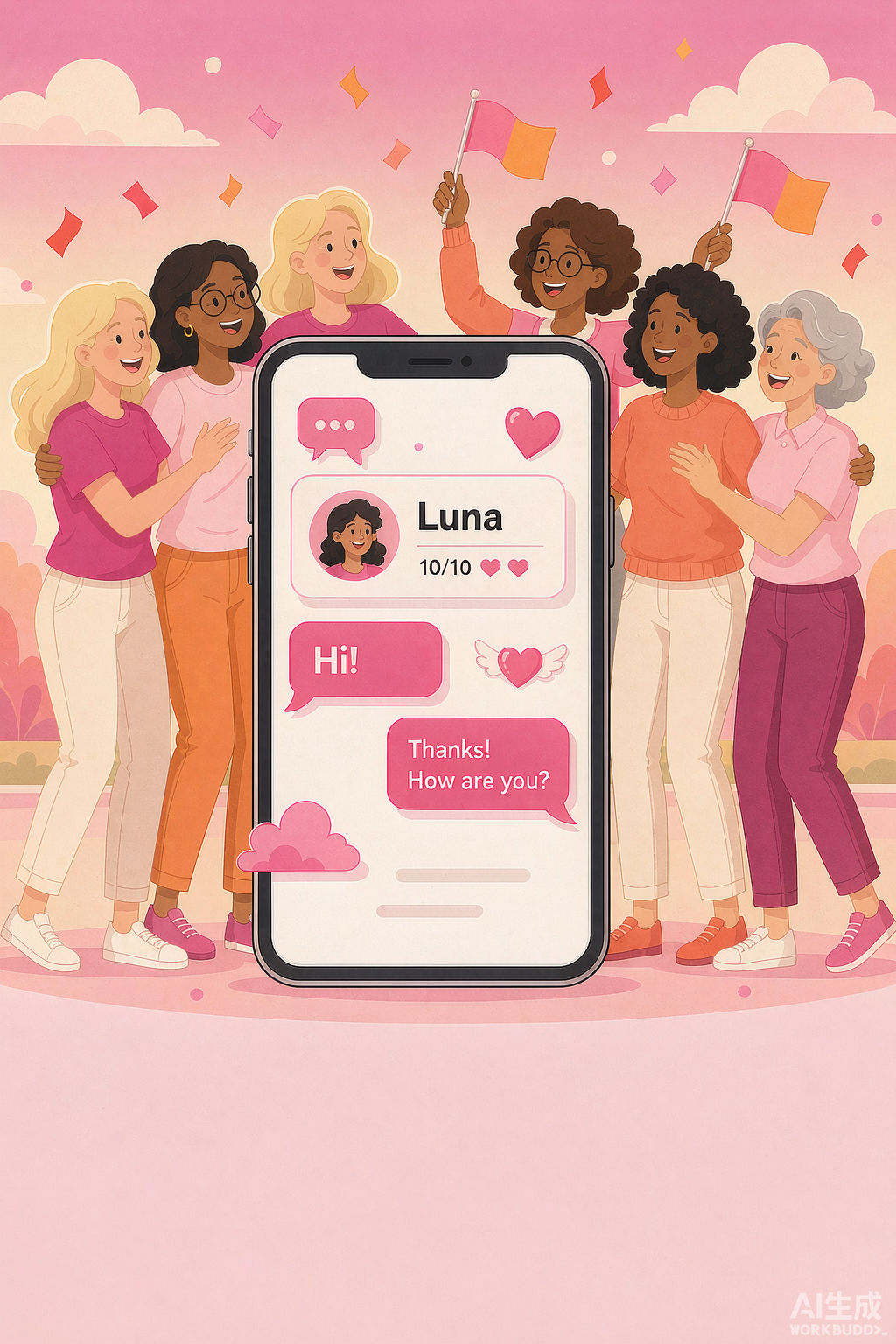
Download LesPark. Send your first hi.
Share the celebration with the world's largest community of lesbian & queer women — the shows, the stories, and the women who are celebrating October 8 right now.
Open LesPark →Insert confirmed download / app-store link before publish.
FAQ: International Lesbian Day
What date is International Lesbian Day?
October 8, every year. In 2026 it falls on Thursday, October 8.
Where did International Lesbian Day start?
The most accepted account traces it to New Zealand — around 40 lesbians marched through Wellington's Central Park on March 8, 1980 — with the date later moved to October 8. Australia held its first event in Melbourne on October 13, 1990. The origins are contested, and historians note conflicting accounts.
Is International Lesbian Day the same as Lesbian Visibility Day?
No. International Lesbian Day is October 8 and centres on culture, herstory and community. Lesbian Visibility Day is April 26 and centres on visibility and advocacy, first marked in the UK in 2008.
Can allies take part?
Yes. The day is explicitly all-inclusive — it is for lesbians and for allies of lesbian rights. Listening, learning and amplifying are all participation.
Why is the "L" often the quietest letter in LGBTQ+?
Because lesbians face the compound of misogyny and homophobia, and can end up feeling accommodated by neither women's movements nor the wider queer community — the HER survey finding that 31% of LGBTQ+ women felt unwelcome at Pride is one measure of it. Separate, dedicated days exist to correct that gap.
Final Thoughts
International Lesbian Day is not a corporate calendar slot. It began with 40 women walking through a park in Wellington in 1980, and it has become a day that lesbian women share across continents — a reminder that visibility is still doing work, and that the work is lighter when you're not doing it alone.
However you mark October 8, mark it with someone. The world's largest community of lesbian and queer women is already there, ready to say hi back.